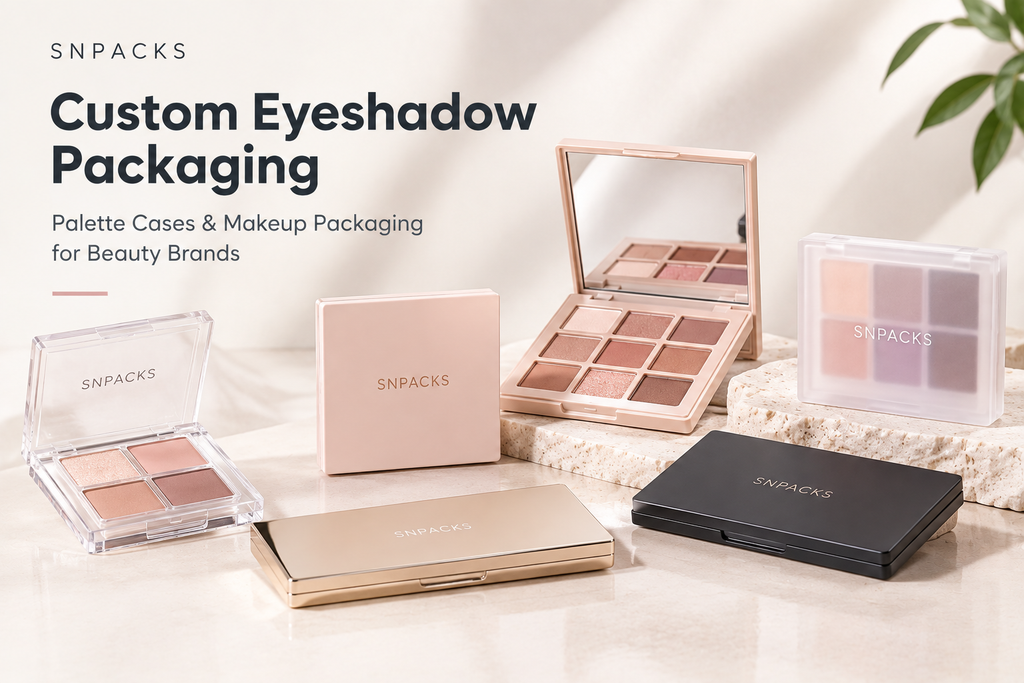
Eyeshadow packaging plays an important role in how a makeup product is presented, protected, and experienced. For beauty brands, the right packaging needs to balance functionality with visual appeal while creating a clear connection to the brand identity.
From compact single-color cases to multi-pan palettes and modular magnetic systems, brands can choose from a wide range of packaging formats. Materials, colors, finishes, pan layouts, and logo decoration can also be customized to create packaging that fits a specific product line.
This guide explores the main types of eyeshadow packaging, customization options, and key considerations for beauty brands developing custom makeup packaging.
Choosing the Right Eyeshadow Packaging Format
The structure of an eyeshadow package affects both its appearance and how consumers use the product. Before choosing materials or decoration, brands should consider the number of shades, product positioning, and overall palette concept.
Single Eyeshadow Cases
Single eyeshadow cases are designed for individual shades and offer a simple, compact packaging solution. They can work well for brands selling individual colors or allowing customers to build their own collections.
Clear lids can also make the shade visible without opening the package, which can be useful for retail displays.
Multi-Grid Eyeshadow Palettes
Multi-grid palettes combine several eyeshadow shades in one compact package. Depending on the design, palettes can contain a small number of shades for everyday use or larger combinations for more complete makeup collections.
For example, a custom 4-grid clear eyeshadow palette case provides a compact format while allowing the colors inside to remain visible.
Magnetic and Modular Palettes
Magnetic palettes offer another approach to eyeshadow packaging. Instead of using a fixed shade arrangement, some designs allow individual pans to be replaced, rearranged, or combined into different configurations.
A custom magnetic makeup palette can be designed around a modular pan system, giving brands more flexibility when developing different product combinations.
Materials for Custom Eyeshadow Packaging
Material selection influences the appearance, durability, and overall positioning of an eyeshadow package. Different materials can create very different visual impressions even when the basic palette structure is similar.
Plastic Eyeshadow Packaging
Plastic is widely used for cosmetic packaging because it can be molded into different shapes and configurations. It also provides flexibility for colors, surface treatments, and printing.
For brands developing larger product collections, plastic packaging can provide a practical foundation for consistent designs across multiple shades and palette sizes.
Clear Eyeshadow Packaging
Clear packaging allows the product colors to become part of the visual design. Transparent lids or cases can make eyeshadow shades immediately visible and can create a clean, modern appearance.
This approach can be particularly useful for colorful collections where the shades themselves are an important part of the product presentation.
Frosted Finishes
Frosted surfaces provide a softer and more understated appearance than fully transparent packaging. They can be combined with different colors and logo treatments to create a more refined visual identity.
For brands looking for a compact multi-shade format, a 6-grid frosted eyeshadow palette is one example of how a frosted finish can be incorporated into a palette design.
Eyeshadow Packaging Customization Options
Custom packaging allows brands to adapt the appearance of an eyeshadow palette to their own visual identity instead of relying entirely on standard packaging.
Custom Colors
Packaging colors can be selected to match a brand's existing identity or the theme of a specific makeup collection.
Neutral colors such as white, beige, black, and soft gray can create a minimalist appearance, while brighter colors can make a younger or more playful collection stand out.
Logo Printing and Decoration
The brand logo can be applied to the lid, base, or other visible areas of the packaging.
Depending on the desired appearance, brands can consider techniques such as screen printing, hot stamping, UV printing, or other decorative processes. The right method depends on the material, surface, artwork, and desired finish.
Surface Finishes
Surface texture can significantly change how an eyeshadow package looks and feels.
Glossy surfaces can create a smooth and vibrant appearance, while matte or frosted finishes can produce a softer visual effect. Metallic details can also be used to create contrast and emphasize premium branding elements.
Pan Configuration
The number and arrangement of eyeshadow pans should be considered early in the packaging development process.
A brand might choose a symmetrical grid for a clean appearance, a larger central pan surrounded by smaller shades, or a modular system that allows different combinations.
The pan configuration should also correspond with the product concept. A small everyday palette may require a very different layout from a professional makeup collection.
How Palette Structure Affects the User Experience
Packaging is not only about appearance. The internal structure of a palette can influence how easily customers can identify and use different shades.
A clear layout can make individual colors easier to distinguish, while larger palettes may benefit from organized shade groupings.
Brands should also consider practical details such as:
Thinking about these elements during the packaging development stage can help create a palette that is both visually appealing and practical to use.
Designing Eyeshadow Packaging for Different Brand Positions
The same basic palette structure can be customized in different ways to communicate different brand identities.
Minimal and Clean
Minimalist makeup brands may prefer simple shapes, neutral colors, subtle logos, and matte finishes.
Reducing unnecessary decorative elements can give the packaging a clean appearance and allow the product itself to remain the focus.
Premium and Luxury
Premium eyeshadow collections often place more emphasis on materials, surface finishes, structural details, and tactile elements.
Metallic decoration, carefully selected colors, custom molds, and refined finishes can all contribute to a more sophisticated packaging concept.
Colorful and Trend-Driven
For younger or trend-focused makeup collections, packaging can become an extension of the color story.
Bright colors, transparent components, playful graphics, and unusual layouts can help create a stronger visual connection between the packaging and the eyeshadow shades inside.
What to Consider Before Ordering Custom Eyeshadow Packaging
Before moving into production, beauty brands should confirm several important packaging specifications.
Product Dimensions
The size and shape of the eyeshadow pans need to match the packaging structure. Brands should confirm pan dimensions, depth, spacing, and the required number of shades before finalizing the design.
Packaging Quantity
Order quantities can affect customization options, production planning, and overall project costs. Brands should determine their expected order volume before selecting a specific packaging solution.
Material and Finish
The material and surface finish should support both the visual direction and functional requirements of the product.
For example, a transparent case may suit a colorful collection, while a frosted or matte surface may better support a minimalist concept.
Retail or Direct-to-Consumer Sales
The packaging requirements may also differ depending on where the product will be sold.
Retail products may benefit from strong shelf visibility and clear product presentation, while direct-to-consumer brands may place greater emphasis on unboxing, brand storytelling, and the overall customer experience.
Artwork and Product Information
Brands should prepare final artwork and confirm which information needs to appear on the packaging.
Depending on the product and market, this may include the brand logo, product name, shade information, ingredient information, weight, and other required details.
Building a Consistent Makeup Packaging Collection
Eyeshadow packaging is often only one part of a larger makeup collection. When developing multiple cosmetic products, maintaining visual consistency can help create a stronger overall brand identity.
For example, an eyeshadow palette can share colors, logo placement, finishes, or decorative elements with lipstick, lip gloss, foundation, and other makeup packaging.
Instead of designing every product independently, brands can establish a packaging system that can be adapted across different product categories.
Custom Eyeshadow Packaging for Beauty Brands
The right eyeshadow packaging should reflect the product concept while meeting practical requirements for manufacturing, presentation, and everyday use.
Whether a brand needs compact single-color cases, multi-grid palettes, clear packaging, frosted finishes, or modular magnetic systems, customization provides flexibility to create packaging around a specific product and brand identity.
For brands exploring different formats and customization possibilities, our Eyeshadow Packaging collection offers additional packaging options to consider.

Custom eyeshadow packaging gives beauty brands more control over the structure, appearance, and presentation of their makeup products. From palette size and pan configuration to materials, colors, finishes, and logo decoration, each element can contribute to the final packaging experience.
By considering the product format, target market, brand positioning, and production requirements early in the development process, brands can create eyeshadow packaging that is both practical and visually consistent with their overall product collection.